
Researched product guidance · Updated 2 November 2026
Omnipure Q5586 review: a carbon-filter kit with a specific evidence trail
Affiliate disclosure: Some links on this page are affiliate links. If you buy through one, Limescale Logic may earn a commission at no extra cost to you. We have not hands-on tested these products. This researched assessment uses the sources linked below.
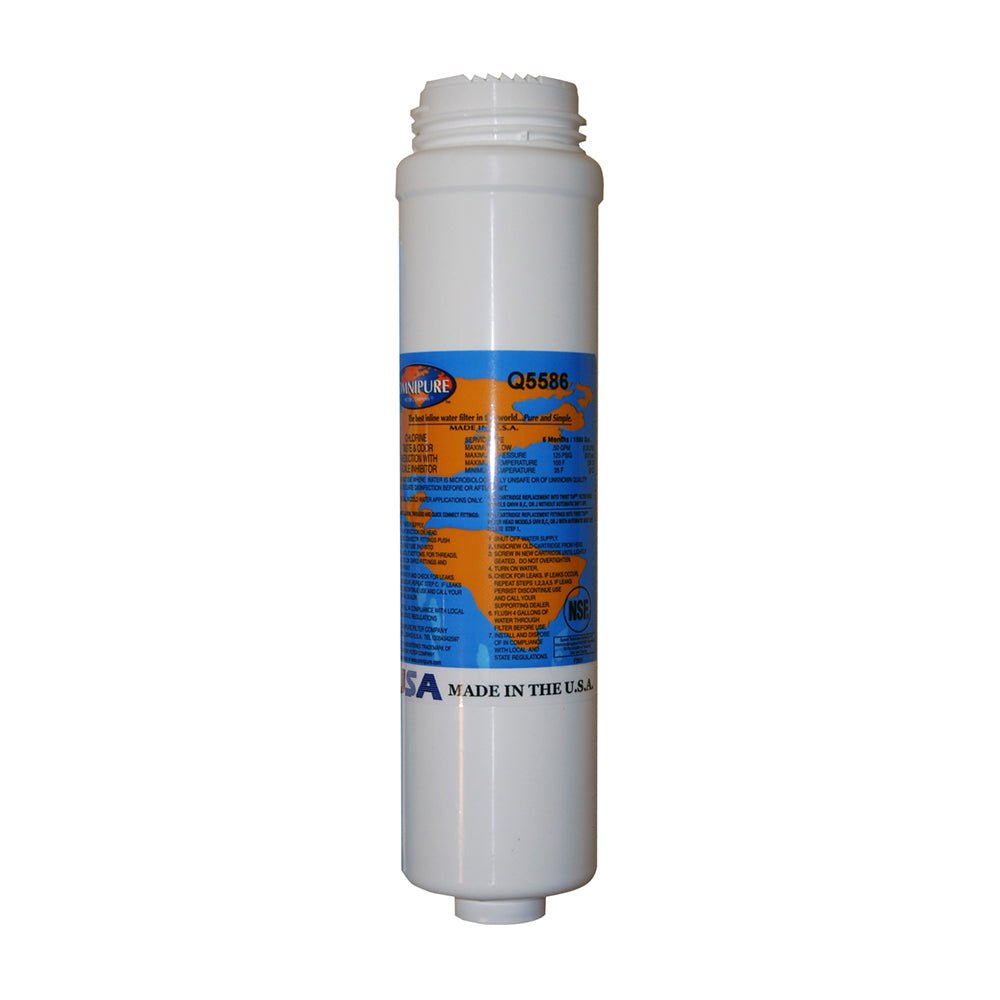
This Omnipure Q5586 review examines practical fit, evidence limits, installation or handling, maintenance and alternatives. It is researched guidance, not a hands-on test.
Jump to a buying question
- Know which item you are comparing
- Use the manufacturer's claim precisely
- Make the installation easy to maintain
- Our assessment
- Omnipure Q5586 review: match the evidence to the kit you will install
- A hypothetical buying mistake: comparing a cartridge price with an installed outlet
- Decide whether your objective is taste, scale or a named substance
- Read the model code as an identity check
- What the performance sheet actually establishes
- A cartridge claim is not a complete-system certificate
- Understand the scale-related wording without calling it a softener
- Put time and capacity limits on the same maintenance card
- Do not confuse a test flow with your tap's everyday delivery
- The supplied head matters as much as the replacement cartridge
- Specify the drinking-water outlet before comparing kits
- Measure the service space beneath the sink
- Ask for an installation plan, not a generic assurance
- Commissioning and flushing are model-specific tasks
- A quieter-looking system still needs an owner
- What to do when flow or taste changes
- Inactivity and holidays need their own instructions
- Compare recurring costs without assuming maximum service life
- Compare the complete installed cost, including what you already own
- Q5586 versus M9MP: documentation and compatibility come before a winner
- Consider alternatives even when they do not pay a commission
- Q5586 versus an RO dispenser is a choice about scope and format
- A purchase checklist for a first-time filter owner
- A checklist for replacing an existing cartridge
- What would make us recommend a different route?
- Our conclusion: a useful option when the whole arrangement is clear
The Omnipure Q5586 deserves consideration for a defined drinking-water taste or chlorine objective. The important distinction is between the cartridge's documented claim, the retailer's complete kit and the plumbing in which you intend to use it.
Know which item you are comparing
Filter Flair lists Q5586SYSTEM as a kit with cartridge, valved head, bracket, valve and tubing. Confirm the dispensing tap and any extra connectors separately. A cartridge-only price is not the price of a working installation. Retailer listing.
Ask for an itemised basket before paying: cartridge, compatible head, fittings, outlet, labour and future replacement parts. Keep the cartridge code in your maintenance record; it makes a later reorder less dependent on remembering the retailer's product title.
Use the manufacturer's claim precisely
Omnipure's Q5586 performance sheet identifies phosphate/GAC media and states NSF/ANSI 42 certification for chlorine and taste/odour reduction. It gives a six-month/1,500-gallon service limit and replacement advice for reduced flow. These are cartridge specifications, not proof of complete-system certification or hardness removal. Manufacturer performance sheet.
For a scale-related purchase, ask what the phosphate stage is expected to achieve under your water conditions. Do not translate an inhibitor description into a promise that calcium and magnesium are removed.
Make the installation easy to maintain
Before fitting, ask an installer to show the isolation point, support for the assembly and the space required to remove the cartridge. Put the replacement date somewhere you will see it. An inaccessible filter is easy to neglect.
Ask for commissioning and flushing instructions for the actual assembly. Keep those with the invoice so the next person servicing the installation can identify what was fitted.
Our assessment
Q5586 is a shortlist candidate when you want a simple, specified carbon-filter route and can confirm compatibility. Its manufacturer documentation is useful, but the recommendation remains conditional on your objective and installation. For household-wide hardness reduction or an unverified safety concern, start with a different assessment rather than assuming this kit covers it.
Continue your research: water filter types, softener vs filter, water filter replacement schedule.
Omnipure Q5586 review: match the evidence to the kit you will install
This Omnipure Q5586 review starts with a distinction that can save a buyer considerable confusion: a documented cartridge and a complete installed system are not the same thing. The cartridge has its own model-specific information. The retailer assembles or supplies a kit around it. Your kitchen then adds the outlet, connections, installation and operating conditions. A good purchase decision checks all three layers rather than treating the cartridge code as the answer to everything.
Q5586 is a sensible shortlist candidate for a defined drinking-water taste or chlorine objective when the complete arrangement is confirmed. Its accessible manufacturer performance sheet gives the buyer something specific to examine. That is an advantage in documentation clarity, not proof that it is the best filter for every substance, every kitchen or every person. We have not installed or independently tested this kit.
The sections below explain how to read the evidence and build a practical ownership plan. They are not substitute fitting instructions or a personal-use story. Where the manufacturer or retailer makes a claim, keep it tied to that source. Where we make an editorial judgement, such as preferring a clearly specified complete basket, it is a buying principle rather than measured product performance.
A hypothetical buying mistake: comparing a cartridge price with an installed outlet
Imagine two quotations. The first looks inexpensive because it names a replacement cartridge. The second includes a head, tap, fittings and installation. A buyer comparing only the headline numbers might conclude that the first arrangement is much cheaper, even though it is not yet an arrangement that can deliver water at the sink. This is a hypothetical comparison, not a report about a particular retailer's quotation.
Write the final working system as a list of components and jobs. Include the cartridge, correct head, any bracket, connection parts, outlet, labour and commissioning. Ask the seller to mark which are in the advertised package and which are additional. If you already have a tap or head, ask for compatibility confirmation rather than assuming that the existing part can be reused.
This gives you a fair boundary for comparison with M9MP, another under-sink option or a dispenser. You can still choose the lower-cost route, but the decision will concern a complete useful outcome. A price that omits a required component is not a saving until the cost and suitability of that component are established.
Decide whether your objective is taste, scale or a named substance
Before comparing products, write the outcome you want. A preferred drinking-water taste is a different brief from reducing a specific substance, and both differ from addressing hard-water scale throughout a home. A single phrase such as better water hides those distinctions. The manufacturer itself directs buyers to compare its stated capabilities with their actual treatment needs.
If your concern comes from a water-quality result, identify the substance and conditions rather than asking whether the filter removes everything. Request appropriate evidence for the complete intended system. If your concern is ordinary taste, compare the documented aesthetic claim with your expectations. If the supply may be unsafe or its quality is unknown, obtain appropriate supply advice instead of treating a domestic carbon cartridge as a universal answer.
The important first decision may be that you do not need this type of product, or that another assessment is needed before buying. That is a useful result. A review should help the reader avoid a mismatch as readily as it helps them find a suitable product. Our recommendation remains limited to the tasks for which the relevant evidence and installation can be confirmed.
Read the model code as an identity check
Q5586 is the model named in the Omnipure performance sheet we reviewed. Filter Flair's complete-kit listing uses Q5586SYSTEM. Those identifiers point to different things: the documented filter model and the retailer's system package. When ordering a replacement or comparing evidence, retain both identifiers and make clear which one you mean.
Ask the retailer to identify the cartridge and head supplied in the current kit. Keep the label details with the invoice and photograph the installed equipment identification after fitting. Do not rely solely on the product title shown in an old email. Retailers can change page wording, package variants or accessory options while a household continues to own an earlier assembly.
Also resist assuming compatibility from a similar code or appearance. A cartridge that looks the same in a small photograph may have a different media arrangement, connection or intended claim. The appropriate confirmation is a match between the current replacement documentation and the equipment fitted. This makes a later reorder a straightforward identification task rather than an exercise in interpreting old marketing descriptions.
What the performance sheet actually establishes
The manufacturer sheet identifies Q5586 as phosphate/GAC and describes NSF/ANSI 42 claims for chlorine and taste/odour reduction. It is useful model-specific evidence. It should not be expanded into a claim covering unrelated substances, conventional hardness removal or certification of every complete assembly a retailer might build around the cartridge. We have not independently checked current certification-register status.
Read the conditions beside a claim, not just the certificate name. Ask which model was assessed, which parameter was measured and how the stated service limit affects use. If a seller supplies an additional certificate, compare its scope with the original claim. Materials suitability, mechanical requirements and contaminant reduction are different evidence questions even when the same standards organisation is mentioned.
We deliberately avoid turning the sheet's laboratory information into a personal prediction about your household. The document helps establish what the manufacturer reports under its stated conditions. Your supply, installed assembly and maintenance still matter. A well-supported narrow claim is more useful than a broad assurance that cannot be traced to a test for the exact equipment and outcome being discussed.
A cartridge claim is not a complete-system certificate
Think of the system in layers. The cartridge is one part. The head, fittings, outlet and other supplied items are additional parts. Installation then brings them together under the conditions in your property. Evidence for one layer does not automatically certify the whole chain. This is why we separate the Omnipure document from the retailer's complete-kit description.
Ask the retailer what evidence applies to the supplied assembly and what each document covers. If the reply cites a cartridge document, that may answer the cartridge question well while leaving other questions open. It is not necessarily a problem, but it should be described accurately. Avoid promoting the complete kit as certified for a broad result unless the evidence actually supports that wording.
The same distinction matters when an installer substitutes a component. A seemingly minor change to the head or outlet may mean that the basket no longer matches the assembly you originally researched. Ask for substitutions to be identified in the final quotation and record. A clear component list is useful both before purchase and years later when another person services the equipment.
Understand the scale-related wording without calling it a softener
The phosphate component and any scale-inhibitor description need a precise explanation from the supplier. Do not translate that wording into a promise that the system removes calcium and magnesium or softens every outlet in the home. The documented taste and chlorine claims do not establish a whole-property hardness outcome. That would be a different treatment brief.
If less scale in a particular appliance is the aim, name that appliance and ask what evidence supports the expected result under your feed conditions. Ask how the result would be assessed and what maintenance it depends on. The answer should distinguish an inhibitor's intended role from removal of hardness minerals, without relying on an attractive photograph of a clean kettle as proof.
For recurring scale across showers, taps and appliances, investigate conventional softening and other categories separately. A point-of-use kit can have a valid purpose without being a whole-home solution. Our Q5586 recommendation is stronger when the buyer understands that boundary than when the product is asked to solve a problem its evidence has not been shown to address.
Put time and capacity limits on the same maintenance card
The performance sheet states a six-month and 1,500-gallon service limit and advises replacement for excessively reduced flow. Retain the manufacturer's original units when recording the specification. Do not silently substitute UK gallons for another gallon convention or use an unlabelled conversion to create an apparently exact litre figure. Ask the supplier to confirm the applicable rated volume if a litre-based schedule is needed.
For planning, record installation date, replacement deadline and any usage limit separately. A household using a relatively small amount of water should not assume that unused capacity makes the time limit irrelevant. Likewise, high use can bring a volume limit forward. The practical question is which applicable limit is reached first under the instructions, not which produces the longest possible interval.
Keep earlier changes visible in the record, including the reason. If flow changes unexpectedly, do not automatically assume that the cartridge has reached capacity; follow current troubleshooting guidance and seek advice about the installed arrangement. A clear schedule prevents both neglect and speculative replacements. It also makes recurring-cost comparisons more realistic because the service interval is an explicit assumption rather than an optimistic guess.
Do not confuse a test flow with your tap's everyday delivery
The manufacturer document contains both test conditions and operating information. They serve different purposes. The rate used to assess a reduction claim is not automatically the rate every installed tap will deliver, and a possible operating range is not a guarantee of a specific result under all conditions. Ask how the complete kit should be used for the claim you need.
Describe your actual task: filling a glass, a bottle, a cooking vessel or supplying a compatible appliance. Ask the retailer or installer what flow should be expected from the proposed assembly and how it should be checked at commissioning. The outlet and connections belong in that conversation, not just the cartridge. We have not measured the kit's delivery in a home.
For a comparison, use the same task and units for both systems. Do not compare a carbon-filter outlet figure with an RO membrane's nominal daily production number and call the larger number faster. A fair comparison has a common volume, outlet arrangement and relevant conditions. If the data are not comparable, record the gap and obtain clarification rather than disguising it with a score.
The supplied head matters as much as the replacement cartridge
The retailer describes a kit with a valved head and related fitting items. Confirm the exact head supplied and ask which cartridge codes it accepts. A head is part of the installed system that may remain in place through several cartridge replacements. Its identity, condition and requirements therefore belong in the ownership record rather than disappearing behind the name on a consumable.
Ask how the head should be supported, where it can be mounted and what access is required to change the cartridge. If an automatic or valved function is described, do not assume it removes the need to follow isolation and depressurisation directions. The complete installation instructions take priority over a short convenience claim on a purchase page.
If reusing an existing head, obtain explicit confirmation that it is appropriate for the proposed cartridge and use. Include its age and condition in the assessment where relevant. A replacement that is mechanically insertable is not necessarily the same as a fully confirmed application. This is one reason an itemised installation plan can be more valuable than a small discount on the cartridge itself.
Specify the drinking-water outlet before comparing kits
Does the advertised package include the tap you intend to use, or is it a filter kit awaiting an outlet? Ask rather than assuming from the photographs. If the sink already has a separate drinking-water tap, identify it and have its compatibility checked. If a new outlet is required, include the tap, connection work and any worktop requirements in the quotation.
Consider the vessels used most often and the available space around the sink. A compact outlet might be easy for one cup but awkward for a tall bottle. A location that looks balanced can interfere with a cupboard, window or dish rack. These are not performance faults in the cartridge; they are system-design choices that affect satisfaction with the completed installation.
If you prefer a combined tap, ask about the required arrangement for that exact tap and filter. Do not infer compatibility from the shared word filtered. The installer should be able to identify which connection supplies which outlet and how the system is isolated. A clear plan avoids buying a cartridge first and discovering later that the desired tap requires a different arrangement.
Measure the service space beneath the sink
Measure the space with the cupboard in its normal state, not after removing everything for a photograph. Include the sink bowl, trap, waste fittings, other appliances and the route of existing pipework. Ask how the filter will be supported and how much clearance is needed to remove and refit the consumable without straining connections.
Think about the maintenance position as well as the installed position. Where will a container or cloth sit if the instructions call for one? Can the person changing the cartridge reach the relevant parts and see what they are doing? Is the isolation arrangement accessible without first removing a shelf of household items? The answers can influence the best mounting location.
Do not make unsupported assumptions about the kit's dimensions from the cartridge alone. Ask for the complete installed assembly dimensions and removal clearance. A retailer may provide component sizes while an installer needs to account for the fittings around them. Planning this before purchase can prevent an otherwise suitable product becoming an awkward maintenance task repeated several times over its life.
Ask for an installation plan, not a generic assurance
The current manufacturer and complete-system instructions should govern the work. Have an appropriately competent installer assess the feed, head, outlet, fittings, operating conditions and any applicable requirements. This review does not provide a sequence for making plumbing connections or authorise a particular fitting method for your property. It helps you ask for the work to be specified properly.
Request an itemised description identifying included parts, additional parts, labour and commissioning. If the installer proposes a substitute, record it explicitly. Ask what assumptions could change the quotation, such as access or an existing outlet that cannot be reused. Clear scope makes it easier to compare quotations and reduces uncertainty about what a seller's system price actually includes.
At handover, the owner should know what was fitted, where it can be isolated, which instructions apply and how to obtain replacement parts. Keep that information together. A working tap at the end of the visit is useful, but a documented installation is easier to maintain responsibly. The best installation is one that remains understandable after the person who fitted it has left.
Commissioning and flushing are model-specific tasks
The Omnipure sheet includes an initial flushing direction and leak-check guidance. Use the current directions together with those for the complete supplied assembly; do not assume that a brief review contains every commissioning requirement. Ask the installer to record what was completed and explain what the owner must do before normal use begins.
If different documents appear to conflict, have the supplier clarify which applies rather than combining selected steps yourself. A cartridge document may address one part of the assembly, while the retailer's kit guidance covers additional components. The correct response is to resolve the difference before use, not to select the shortest procedure because it seems convenient.
Keep the installation and first-use dates with the consumable schedule. That distinguishes the date equipment was purchased from the date service life began. We do not provide an alternative flush recipe, and we do not claim that a particular water appearance or taste proves commissioning is complete. Follow the applicable directions and contact the supplier if a concern remains after the instructed procedure.
A quieter-looking system still needs an owner
An under-sink kit can be easy to forget because it is out of sight. That makes ownership records and access especially valuable. Decide who monitors the replacement date, where the instructions live and who will arrange service if needed. A system is not maintenance-free simply because the daily user only sees a tap.
Make the reminder describe the actual job and component. Record the fitted model code and the supplier contact, then note each replacement date and any change in the arrangement. A calendar entry that says change water filter is less useful to another household member than one that identifies the installed cartridge, applicable limits and location of the instructions.
Do not use the record to invent a longer service interval. Its purpose is to follow the applicable limit reliably and give a service provider useful history. When a routine is clear, comparisons with other kits become more honest: you can compare the cost and effort of the whole maintenance process, not just the price of a consumable that might be neglected in a cupboard.
What to do when flow or taste changes
First identify what changed and when. Note whether the change followed installation, a replacement, a period of inactivity or another plumbing event. Check the current instructions and contact the supporting supplier with the model and details. Do not treat taste as a universal indicator of the status of every possible substance; the system's defined service limits still matter.
If flow becomes too slow, the manufacturer includes replacement advice, but an unexpected change can still merit assessment of the complete installation. Avoid dismantling components or bypassing equipment based on a general article. A review cannot diagnose whether the cause is a consumable, connection, feed condition or another part of the plumbing from a short description alone.
For leaks or other concerns, follow the manufacturer's safety guidance and obtain appropriate help. Keep the isolation location known to the responsible people. The useful pre-purchase question is how support works: who answers, what information is needed and what happens if the issue involves the kit rather than just the cartridge. That service route can matter more than a small equipment-price difference.
Inactivity and holidays need their own instructions
Ask the retailer what the current assembly requires after periods without use. Do not borrow a flushing interval from another filter brand or assume that a few seconds at the tap is the appropriate answer for every absence. The applicable directions should cover both routine use and return after inactivity, particularly if the property is occupied intermittently.
Explain your usage pattern before buying if long absences are normal. A weekend property, an occasional kitchen or a household travelling frequently may have different practical concerns from a system used every day. This does not establish that Q5586 is unsuitable; it identifies information needed to make the maintenance plan fit the actual use pattern.
Keep any shutdown or restart task in the same record as replacements. If someone else looks after the property, make the supplier's instructions available rather than relying on memory. A good ownership decision includes the periods when the filter is not being used, because the right purchase is one whose full routine the household can follow consistently rather than only during a normal busy week.
Compare recurring costs without assuming maximum service life
Use the applicable time and capacity limits to build a realistic consumable budget. Include delivery, any necessary service labour and the costs of keeping the installation in the required condition. If the household may reach a volume limit earlier than the time limit, show that scenario. Do not budget around whichever interpretation gives the lowest annual figure.
Keep the initial basket separate from ongoing costs. The head and outlet may not be replaced with each cartridge, but they still have an identity, condition and service requirements. If a future repair allowance is included, label it as an assumption rather than a prediction. A cost worksheet is a planning aid, not evidence of guaranteed durability.
Compare the same period and tasks with M9MP or another filter. Use M9MP’s supplier-confirmed six-month-or-5,678-litre schedule, whichever comes first, allowing for earlier changes when required. Do not substitute Q5586’s interval. Confirm current cartridge, delivery and labour costs separately.
Compare the complete installed cost, including what you already own
Existing equipment can change the basket, but only when its compatibility is confirmed. A suitable outlet or head may reduce the work required; an unsuitable or poorly accessible installation may add work. Ask the installer to identify what will be retained and why it is appropriate. Do not subtract a new component's price merely because something similar is already under the sink.
Include permission and reinstatement where relevant. A renter should establish what alterations are permitted and what happens at the end of the tenancy. An owner planning a kitchen change should consider whether the arrangement is likely to move. These questions can influence whether a fixed drinking-water outlet is the most convenient format for the next few years.
The final quote should describe a functioning outlet, not an isolated bag of parts. Once it does, compare it with the complete cost of alternatives that answer the same brief. A countertop dispenser includes functions that a carbon kit does not, while a carbon kit may avoid functions you do not need. The fair question is which complete arrangement meets your stated task with acceptable effort and cost.
Q5586 versus M9MP: documentation and compatibility come before a winner
Both products belong on a carbon-filtration shortlist for a defined drinking-water task. Filter Flair confirmed on 2 November 2026 that M9MP should be replaced every six months or 5,678 litres, whichever comes first, with earlier replacement where water quality, reduced flow or returning unwanted taste or odour requires it. It also confirmed that its M9M-headed appliance list applies to M9MP. Those two uncertainties are resolved. Q5586’s accessible manufacturer sheet remains a documentation distinction, not proof of superior measured performance. Compare complete package, exact installation fit, maintenance costs and model-specific performance evidence.
Ask the same questions of both suppliers: exact cartridge and head, complete basket, applicable claim, operating limits, time-based replacement interval, capacity and support. Then compare the answers under your installation brief. A smaller micron number or a larger claimed capacity does not settle all those questions, and a low headline price does not establish an installed-cost advantage.
If one product has a clearly confirmed compatibility match for your existing equipment, that may change the recommendation. If another has more accessible consumables or better support for the task, record that too. The right comparison is conditional and explainable. We would not manufacture a universal score merely to make a shortlist look more decisive than the available evidence allows.
Consider alternatives even when they do not pay a commission
A useful shortlist should be allowed to include another route. For a conventional filtered drinking-water outlet, BRITA's official mypure P1 page describes an under-sink system with a dedicated dispenser and its own cartridge arrangement. We have not tested it or established that it is the right substitute for your kitchen. It is a relevant competitor to research if its documented functions match the objective.
Compare the complete supplied kit, replacement availability and applicable instructions rather than transferring claims between brands. Different media can address different aspects of the water, and a shared under-sink format does not establish equivalent performance. Ask the same clear question about your objective and obtain the evidence for each model being considered.
It is also reasonable to decide against adding a filter when there is no defined benefit that justifies the equipment and care. This review's affiliate relationship does not require the reader to buy something. Our most useful recommendation is the smallest appropriate treatment scope with adequate evidence and a manageable ownership routine, whether or not the final choice is one of the linked products.
Q5586 versus an RO dispenser is a choice about scope and format
The Zero and Fusion reviews concern RO drinking-water dispensers with additional temperature-controlled functions. Q5586 concerns a carbon-filter kit for an outlet. Comparing these products only by purchase price overlooks what each arrangement is intended to do. The relevant comparison begins with treatment objective, outlet, required functions and ownership routine.
If preferred drinking-water taste is the confirmed task, ask whether the documented carbon option meets it. If a specific RO capability is required, identify the claim and evidence that make it necessary, then compare complete systems suited to that task. Do not use the existence of more stages or an unfamiliar feature name as a substitute for that reasoning.
The dispensing format matters too. A drinking-water tap does not provide the same hot and chilled station, while a dispenser introduces its own space, handling or installed-service requirements. You might value those functions highly or not at all. A clear decision explains which benefits you will use and which extra jobs you accept, rather than assuming that the more complex appliance is the more appropriate one.
A purchase checklist for a first-time filter owner
Before paying, ask the seller to confirm the exact cartridge and head, the included fittings and the intended outlet. Obtain current installation, commissioning and maintenance documents. Ask for the applicable operating limits, replacement schedule and support arrangements. If a performance claim matters, request the evidence for that exact model and keep the scope clear.
Then walk through the installation plan with the person responsible for the kitchen. Can the assembly be accessed, can it be isolated, can the consumable be changed as instructed, and is the replacement code recorded? These are practical checks that do not require specialist knowledge, but they make a significant difference to how easy the system is to own.
Finally, identify the reason you are choosing Q5586 over a simpler arrangement or another documented filter. The reason should connect to your objective, installation and maintenance plan. If it depends on a claim the seller has not clarified, leave the decision open. Asking one more precise question before ordering is often more useful than reading another generic list of benefits.
A checklist for replacing an existing cartridge
Start with the installed label and current instructions, not the last product remembered from a search. Identify the head and cartridge together and ask for confirmation if either code is unclear. If the original installation has been altered, record the change before ordering a replacement. A previous successful purchase is useful history, but it does not establish that every later listing with similar wording is equivalent.
Check whether the current service task includes more than changing the consumable. The supplier may need to advise on inspection, cleaning or commissioning for the actual assembly. Follow those directions rather than assuming a quick-change description means no preparation is required. Keep the replacement date and code in the record once the task is complete.
If the reason for replacement is an unexpected problem, give the supplier that context. A normal scheduled change and a sudden operating change are different conversations. This review does not prescribe a repair or diagnose the cause. It helps make sure the person advising you knows what is fitted, how it has been used and why you are requesting a new part.
What would make us recommend a different route?
We would recommend a different assessment if the objective were whole-home hardness reduction, an unverified health-related concern or water of uncertain safety. We would also pause if the kit could not be installed within its applicable conditions or maintained accessibly. Those are suitability boundaries rather than allegations of a defect in Q5586.
Another product might be more appropriate when its exact compatibility, complete basket and service support are better established for the user's situation. A countertop route might suit someone who cannot arrange permitted installation, while a different installed filter might suit an existing outlet. The point is to choose with the constraints visible, not to force every household into the same affiliate-linked basket.
We would update this review if the current manufacturer documents, retailer package or reliable evidence changed. Supplier information should remain attributed to its source, and an independent test would be identified as such only if it actually existed. For now, Q5586 is a documentation-led shortlist candidate for a defined carbon-filter task, with the complete installed arrangement still requiring confirmation.
Our conclusion: a useful option when the whole arrangement is clear
The strongest reason to investigate Q5586 is the combination of a defined cartridge identity and accessible model-specific documentation. That makes it easier to ask a precise question about a taste or chlorine objective. It does not establish a universal best filter, an all-substances result or a whole-house softening outcome. The recommendation remains narrower than those claims.
Choose only after the kit, outlet, installation and maintenance plan agree with the evidence and your needs. Keep the applicable time and capacity limits visible, retain the component codes and know where support comes from. These practical details can determine whether a modest under-sink system remains useful long after its initial installation.
If that arrangement fits, check the current retailer details and complete basket before ordering. If it does not, use the comparison and the other reviews to investigate a different scope or format. A clear no-purchase or alternative-product decision is a successful outcome when it prevents buying equipment that does not answer the original question.
Alternative research: BRITA mypure P1 official product information. This is a research lead, not an affiliate endorsement or a hands-on review.